
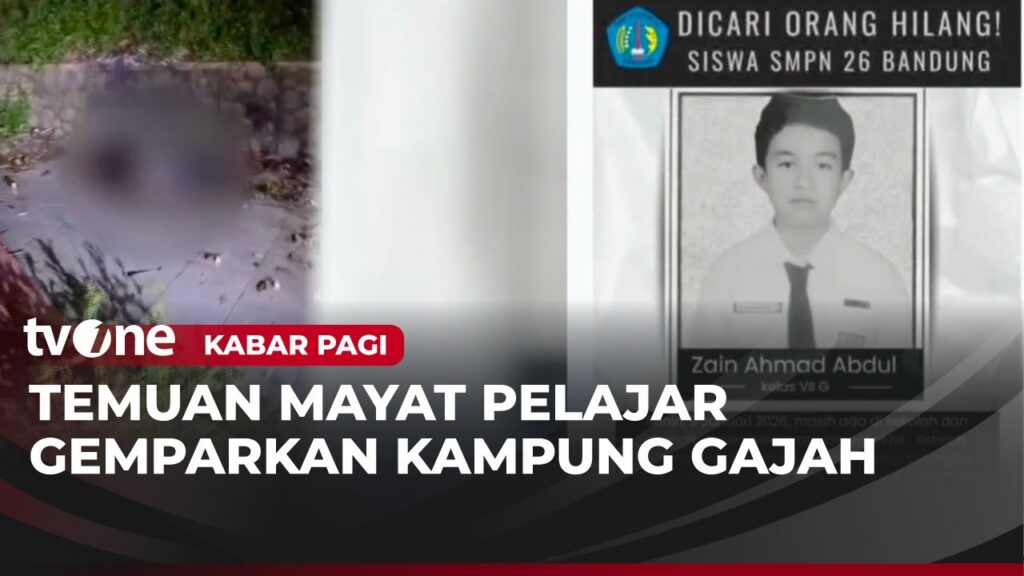
Kampung Gajah used to be a place people visited for entertainment. After it closed, the abandoned attraction in West Bandung became something else: a ruin, a backdrop for horror content, and one of those empty places that the internet loves because it feels half-real and half-haunted.
On the night of 13 February 2026, that atmosphere stopped being entertainment. People livestreaming a night exploration at the former Kampung Gajah site found a body in the dark. Indonesian media publicly identified the victim by the initials ZAAQ and the name Zein, a 14-year-old student from SMPN 26 Bandung.
The story spread quickly because of how people found him. But the livestream is not the heart of this case. The abandoned building is not the heart either. The real story is a child who disappeared after school, a family searching for him, and a friendship that police say had become dangerous long before anyone outside the family understood how serious it was.
The Place: Eks Kampung Gajah
Kampung Gajah Wonderland was once a family tourist destination in Cihideung, Parongpong, West Bandung Regency. By 2026, the former attraction had become a neglected site with empty structures, overgrown corners, and the kind of reputation that draws ghost-hunting content creators.
That context matters. The location did not only hold Zein’s body; it also helped the discovery go viral. People were already watching because online creators had framed the place as eerie. Then the camera found something real.
According to local reporting, people conducting a TikTok live exploration discovered the body on Friday night, 13 February 2026. At first, they reportedly did not understand what they were seeing. They then reported the discovery to security and police.
Who Was Zein?
Zein was a seventh-grade student at SMPN 26 Bandung. His school principal, Titin Supriatin, described him to detikJabar as quiet, kind, and not the kind of student who caused problems at school. His name did not appear in school conflict records, and the school did not know of trouble involving him.
That is one of the painful details of this case: in the place where adults watched him every day, Zein seemed safe. He went to class. Teachers knew him as a quiet child. Whatever danger followed him from outside school did not become visible enough to stop what happened.
His family later told reporters that Zein had roots in Garut and that his connection to one of the suspects went back years. Some reporting traced the relationship to elementary school. Police later said the family had moved Zein’s schooling to Bandung in part because of concerns around that relationship.
The Days Before He Was Found
Zein last attended school on Monday, 9 February 2026. According to reporting from detikJabar, he followed classes that day and went home with friends. After that, he did not return home.
On Tuesday, his family told the school that he could not attend because he had not come home. Relatives searched. Messages and rumors began circulating. Like many missing-child cases now, the search unfolded not only in streets and family networks, but also through phones, group chats, and social media.
For several days, Zein remained missing. Then, on Friday night, searchers and viewers learned that someone had found his body at the former Kampung Gajah site.
The Police Theory
Police later arrested two teenagers from Garut, identified publicly by initials YA and AP. Police described YA, 16, as a vocational-school student. AP, 17, reportedly no longer attended school. Because both suspects were minors, this article will not publish their full names.
According to Cimahi Police Chief AKBP Niko N. Adi Putra, investigators believe the suspects planned the killing. Police said YA felt hurt because Zein wanted to end their friendship. YA allegedly travelled from Garut to Bandung with AP, met Zein, and took him to the former Kampung Gajah site.
Indonesian reporting cited police saying the attack happened on Monday, 9 February 2026, the same day Zein disappeared. People did not discover his body until Friday, 13 February.
Police also said YA allegedly tried to create a false story after the killing by using Zein’s phone and belongings to send messages suggesting kidnappers had taken him. That detail matters because it shows how quickly a crime can become a second crime of narrative: not only taking someone’s life, but trying to control what everyone else believes happened afterward.
A Friendship That Became Fear
Several reports describe the motive as sakit hati – hurt feelings or resentment – after Zein cut off the friendship. Police also said YA described the relationship as more than ordinary friendship, and that investigators planned to involve psychological evaluation to understand the statement more fully.
That wording needs care. Cases like this can easily become sensationalized through insinuation, especially when the people involved are minors. The responsible point is simpler and more serious: according to police, Zein tried to create distance from someone who did not accept it. That refusal to accept distance allegedly escalated into violence.
There is a lesson here that should not be softened because the people involved were young. Children and teenagers can experience coercion, obsession, threats, stalking, and controlling relationships. Adults often miss it because they expect those patterns to belong to the adult world. Zein’s case suggests they do not.
The Viral Discovery Problem
The case became widely discussed partly because people discovered Zein’s body during a livestream. That detail made the story travel fast. It also exposed the case to the worst habits of the internet: screenshots, speculation, reposted grief, and people treating a child’s death as content.
Social media can make a victim visible only after it is too late. The livestream did help reveal where Zein was. But virality also risked swallowing the person at the center of the case. Zein was not a shocking clip. He was a student, a family member, and a child whose last days deserve careful discussion.
The Legal Status
As of the available public reporting after the arrests, the case remained in the criminal process. Police had named YA and AP as suspects and discussed serious charges connected to murder, alleged planning, and child protection law. Some reports noted that the relevant provisions could carry extremely severe penalties.
Because the suspects are minors and the case was still developing, it is important not to write as though a court has already reached its final judgment. The police account is the current public framework, but the legal process still matters. Zein deserves justice, and justice requires evidence, procedure, and a verdict that can withstand scrutiny.
Why This Case Matters
The Zein case is not only about one abandoned tourist site. It is about the kinds of danger adults can fail to recognize when they appear inside teenage friendship, school movement, family networks, and phones.
It is also about how people witness modern cases. Someone can find a body while livestreaming horror content. A suspect can send a fake kidnapping message from a victim’s phone. A family’s panic can become public speculation before facts are known. The digital layer does not sit outside the crime anymore. It becomes part of the timeline.
Every case has a name. Zein’s name should not shrink into the place where people found him. Kampung Gajah became the headline because it feels eerie and recognizable. Zein remains the story because he was a child who should have gone home.
Sources and Further Reading
- detikJabar: profile of the SMPN 26 Bandung student found at former Kampung Gajah
- detikJabar: livestream discovery of the body at Kampung Gajah
- detikJabar: chronology and police account of the killing
- detikJabar: police comments on the friendship motive
- JPNN: police account of the alleged false kidnapping message
- PasJabar: initial report on the body found at former Kampung Gajah